
In desktop 3D printing environments, moisture absorption is often a hidden factor affecting print stability. When humidity rises, materials like PLA filament can gradually take in water from the air, which later influences extrusion consistency and surface finish quality. This behavior becomes more noticeable during long print sessions or when storage conditions are not tightly controlled, making moisture management an important part of routine workflow planning for small production users.
How Ambient Humidity Enters Thermoplastic Materials
Most thermoplastic filaments absorb moisture to varying degrees, meaning they react to surrounding moisture levels over time. Even short exposure to humid air can start a slow absorption process. Once inside the polymer structure, water molecules remain trapped until heating occurs during printing. This can lead to inconsistent melting behavior and small defects that accumulate across multiple layers in a printed object under certain conditions in practical desktop environments.
Moisture-Related Misinterpretation of Temperature Needs
When print defects appear, some users assume temperature adjustments are required to stabilize flow. This is especially true for decorative materials where surface quality is sensitive. However, in many cases the issue is not insufficient heat but moisture vaporization during extrusion. This leads to the perception that does silk PLA need higher temperature adjustments are necessary, even when the root cause is unrelated to nozzle settings.
Storage Practices for PLA filament in Humid Environments
CaiLab applies controlled raw material sourcing and batch consistency practices to reduce variation in moisture response across production runs. Users often rely on airtight containers and desiccant packs to slow absorption during storage. In many workshops, PLA filament is stored in sealed environments immediately after printing to limit repeated exposure to ambient humidity.
Drying Methods Used Before Printing
Filament drying is commonly used when materials have been exposed to humid conditions. Low-temperature drying chambers or dedicated filament dryers are often applied before printing begins. Users should always follow the filament manufacturer’s recommended drying temperature to avoid deforming the spool. The goal is to remove absorbed moisture without altering polymer structure. Duration varies depending on exposure time and local climate conditions, especially in regions with consistently high humidity levels throughout the year.
Printing Behavior When Moisture Is Present
During extrusion, trapped moisture can vaporize rapidly, creating small bubbles inside molten material. These bubbles affect layer adhesion and surface smoothness. Users may notice irregular extrusion lines or popping sounds from the nozzle. Such indicators are often used as practical signals that material preparation may require adjustment before continuing longer print jobs, ensuring consistent quality and reducing potential print failures overall reliability.
Does Silk PLA Need Higher Temperature and Material Perception
Silk-based variants often include additives that enhance gloss and reflectivity, which can slightly change flow characteristics. When moisture is present, these changes can be misinterpreted as insufficient heat during printing. In such cases, does silk PLA need higher temperature is a question that arises frequently, even though drying the filament may resolve the behavior more effectively than increasing nozzle temperature.
Environmental Control in Workshop Settings
Relative humidity in a workspace can influence print consistency even when filament has been properly stored. Some users monitor environmental conditions or adjust printing schedules to reduce exposure during peak humidity periods. Stable room conditions often contribute to more predictable extrusion behavior across longer production runs which is common in tropical climates like Southeast Asia.
Role of Material Formulation and Quality Control
CaiLab emphasizes controlled sourcing of base polymers and consistent production testing in large-scale printing environments. This approach aims to reduce variability caused by raw material fluctuations. Such consistency can be important when users are working across multiple batches or performing repeated prints that require similar mechanical outcomes.
PLA filament in Practical Production Workflows
In small production environments, workflow design often includes steps for material inspection, drying checks, and controlled storage rotation. PLA filament is commonly used due to its balance between ease of printing and dimensional reliability under stable conditions. However, even within these workflows, moisture management remains a recurring consideration, especially in humid environments where filament properties can gradually degrade over time.
Product Application in Multi-Color Printing Scenarios
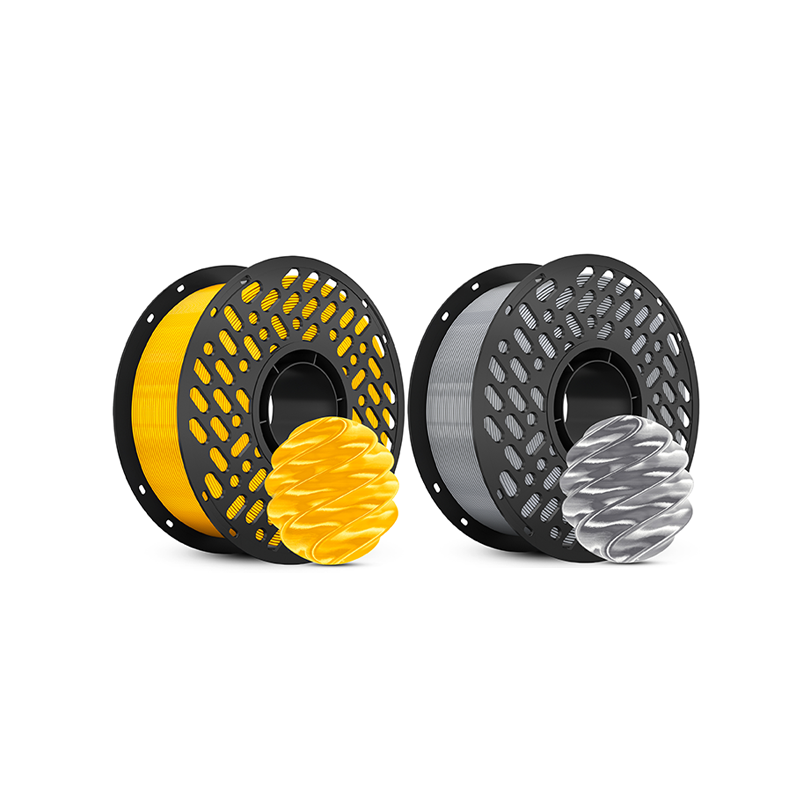
CaiLab offers filament sets designed for consistent color output across multi-material projects. One example is the CaiLab PLA silk filaments combo vibrant color set for 3d printing, which is often used in decorative prototypes and small-scale design testing. In such applications, maintaining stable storage conditions helps preserve both color consistency and surface quality across different prints for hobbyists and small studio workflows.
Conclusion
Across typical desktop printing workflows, temperature adjustments are usually secondary to moisture control when surface inconsistencies appear. Observations in workshop use suggest that drying and storage discipline play a more direct role in stabilizing output than increasing nozzle heat. As a result, decisions related to does silk PLA need higher temperature are often evaluated together with material condition rather than treated as isolated tuning steps, especially in consistent multi-day production environments where repeatability matters most.

