
Safety should be evaluated before a powered dental chair reaches the treatment room, not after installation. A chair can have a sophisticated control panel, smooth motorized movement, and an attractive design while still requiring closer examination of how it behaves when a patient, operator, or object enters the movement path.
For clinics comparing an electric dental chair, the useful question is therefore not simply how many safety features are listed. Buyers should ask what each mechanism is designed to prevent, whether it acts automatically, how quickly it responds, and what evidence the manufacturer provides. ISO 7494-1:2018 specifically covers stationary dental units and dental patient chairs and includes requirements concerning controls, function-stop systems, usability, and cleanable surfaces.
Chair Movement Is the First Safety Test
Motorized movement creates the most obvious safety questions because the chair can raise, lower, recline, and return to programmed positions while a patient is seated.
ISO 7494-1 requires electrically powered dental patient chairs to incorporate at least one function-stop system that can be easily activated by operating personnel and that instantly stops hazardous powered chair movements.
That requirement gives buyers a useful starting point: locate the stop function before purchasing and determine whether staff can reach it quickly. A safety mechanism is much less useful if its location is difficult to remember or access during an unexpected event.
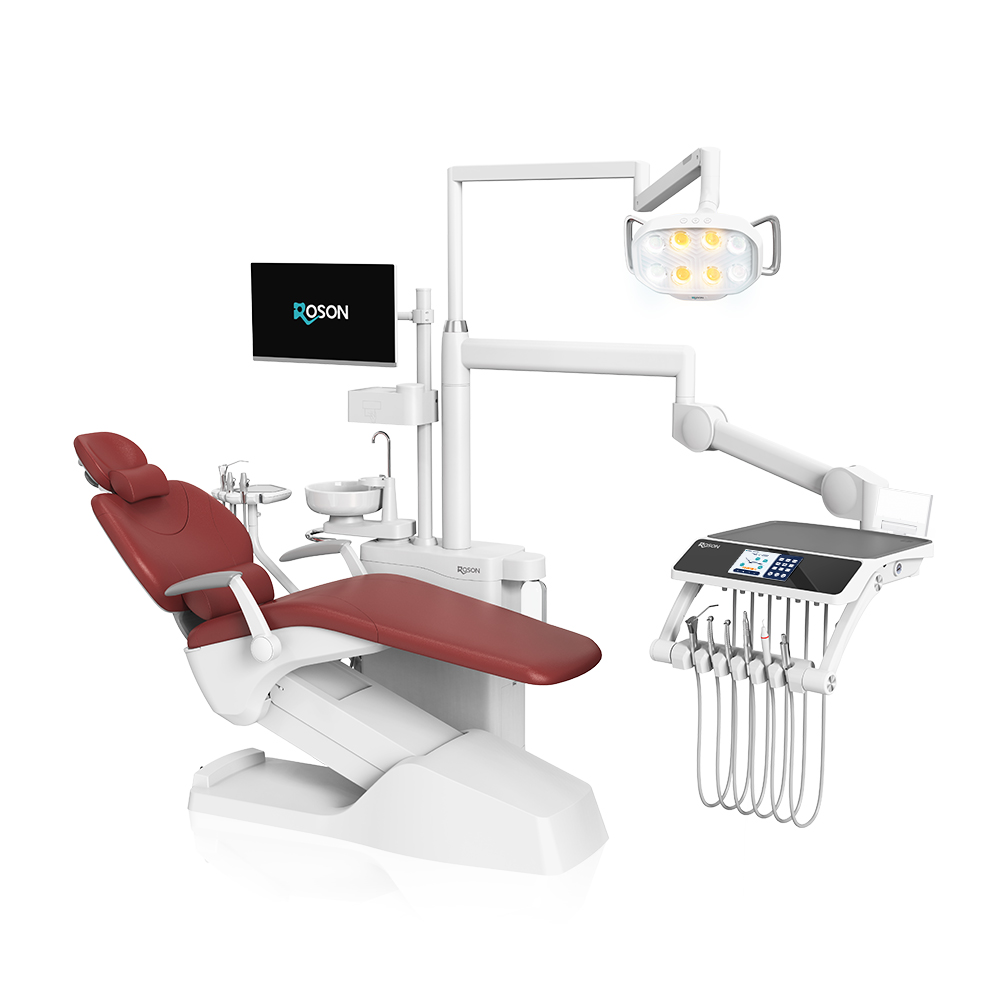
The S9+ takes the concept further with obstacle-detection systems around several moving areas. Its backrest is designed to reverse when an obstacle is detected, while the lifting mechanism includes foot protection intended to move away when contact occurs.
For purchasing teams, the practical test is simple: Where can the chair move, what could enter those spaces, and what happens if an obstruction appears?
Anti-Pinch Protection Should Be Checked at Every Moving Point
Anti-pinch protection deserves more attention than a single checkbox because different parts of the chair create different risks.
The S9+ lists separate protection for the legs, feet, and hands. Its backrest uses obstacle detection and automatic reverse movement, the lifting section incorporates foot protection, and the armrest/spittoon area uses obstacle sensing designed to move away after contact.
This distinction matters because a chair can be protected in one movement zone while leaving another area dependent on operator awareness.
Buyers should therefore inspect the entire movement envelope rather than accepting “anti-pinch” as a general product description. Ask which components are monitored, whether detection causes an immediate stop or reverse movement, and whether the function covers normal operating positions.
The manufacturer’s stated S9+ configuration also identifies anti-pinch leg, foot, and hand protection as standard features. For a clinic, those details are more useful than a generic claim that the chair is “safe.”
Emergency Stops and Movement Locks Serve Different Purposes
Stopping the chair during an unexpected situation is one safety task. Preventing movement from being triggered at the wrong time is another.
The S9+ includes a one-touch emergency-position function as well as an intraoperative safety-lock system. The latter automatically locks patient-seat movement when the handpiece, scaler, or micromotor is operating, reducing the possibility of unintended chair movement during treatment.
These mechanisms should not be treated as interchangeable. An emergency function is intended for an abnormal situation. A movement lock works proactively by restricting certain chair movements while treatment equipment is active.
The distinction is important when comparing an electric dental chair because safety is not only about reacting quickly to an accident. Good design also attempts to prevent an inappropriate command from producing movement in the first place.
ISO 7494-1 specifies comprehensive requirements for the design and positioning of controls and indicators—including their visibility, logical grouping, accessibility, and clear identification—to ensure they can be operated safely and intuitively while minimizing the risk of accidental activation.
Controls Need Protection Against the Wrong Command
Digital controls can improve usability, but they also introduce another purchasing question: what happens if a command is activated unintentionally?
The S9+ uses a medical-grade 7-inch touch control screen and provides configurable memory positions. Its self-developed control system also includes shortcut combinations and individual user profiles.
For buyers, the important issue is not whether a touchscreen looks modern. The interface should be evaluated according to whether important movements can be controlled deliberately and whether treatment-related functions are clearly separated.
Foot controls deserve the same attention. The S9+ configuration includes a four-way foot controller. Since ISO 7494-1 specifically requires an accessible function-stop system, clinics should verify how the foot control interacts with emergency stopping and chair movement rather than assuming all controls perform the same role.
Water and Surface Safety Belong in the Same Evaluation
Mechanical protection is only part of the safety assessment. Dental units also manage treatment water, suction, contaminated surfaces, and materials that are repeatedly exposed to cleaning and disinfection.
ISO 7494-1 includes requirements concerning cleaning and disinfection of external and touchable surfaces that may be contaminated by aerosols, splashes, and droplets during normal use. ISO 7494-2:2022 separately addresses stationary dental-unit connections and systems involving compressed air, water, suction, and wastewater.
The S9+ incorporates an EOW-TECH electrolytic oxidized disinfection system and states a bacterial reduction rate of ≥99.9999% on its product page. The page also lists multiple supporting test reports. Buyers should treat such claims as product-specific evidence to verify rather than assuming that every model from the same manufacturer provides identical performance.
Roson also lists cleanable upholstery materials and a five-year warranty for the S9+ water and air pipelines and seamless microfiber leather.
The Final Check Is What the Manufacturer Can Prove
A safety feature becomes much more useful during procurement when the manufacturer can explain how it works and provide appropriate documentation.
Clinics should request the applicable standards, test documentation, user manual, installation requirements, and details of the safety functions included in the quoted configuration. ISO 7494-1 specifies requirements not only for the equipment itself but also for instructions for use, technical descriptions, marking, and packaging.
IEC 80601-2-60:2019 is another relevant standard for the basic safety and essential performance of dental units, dental patient chairs, dental handpieces, and dental operating lights.
This documentation check is particularly important when comparing suppliers because two chairs may use similar words—“anti-collision,” “emergency,” or “safe control”—while implementing those concepts differently.
Roson’s S9+ provides a useful example of a specification that can be examined feature by feature: anti-pinch protection at multiple points, emergency positioning, an intraoperative safety lock, digital controls, and a dedicated disinfection system.
The safest purchasing decision is not based on the longest safety-feature list. A clinic should verify where the chair can move, what detects an obstruction, how movement can be stopped, what prevents accidental commands, how water and surfaces are managed, and which standards or test documents support the claims.
While Roson‘s S9+ illustrates how these factors unite in one platform, a broader lesson applies across every electric dental chair on the market. Safety must be judged through tangible elements like physical guards, logic systems, infection control, emergency response, and verified documentation, rather than accepted as a superficial brand label.

