
Industrial Ethernet has become an important communication technology in manufacturing, energy, transportation, and automation systems. Unlike office networks, industrial environments expose communication equipment to electrical noise, continuous operation, and changing environmental conditions. These factors place greater demands on magnetic components inside Ethernet interfaces. Understanding how an ethernet transformer manufacturer contributes to signal integrity helps equipment designers make more informed decisions when selecting components for industrial network products.
Why Signal Integrity Matters in Industrial Communication
Signal integrity refers to the ability of electrical signals to travel through a communication channel without excessive distortion or interference. In Industrial Ethernet, poor signal quality can reduce communication reliability, increase transmission errors, or affect network stability during long operating periods.
Magnetic components play an important role in maintaining signal quality. Ethernet transformers provide galvanic isolation between devices, help match impedance, and reduce common-mode noise that may enter the communication path. These functions support stable data transmission while helping network equipment meet electrical safety requirements.
Industrial systems often connect programmable logic controllers, sensors, motor drives, industrial cameras, and communication gateways. Because these devices may operate near motors, switching power supplies, or high-current equipment, magnetic components must continue performing consistently despite complex electromagnetic environments.
How an ethernet transformer manufacturer Addresses Electrical Challenges
Industrial applications introduce challenges that differ from those found in ordinary office networks. Long cable runs, electrical interference, temperature variation, and continuous operation all influence communication performance. Engineers therefore evaluate transformer characteristics alongside the overall network design instead of treating them as standard interface components.
Several electrical parameters deserve careful attention during product development. Insertion loss affects signal strength, while return loss influences signal reflection caused by impedance mismatch. Common-mode rejection helps suppress unwanted electrical noise, improving communication quality in electrically demanding environments.
Transformer construction also contributes to performance. Core materials, winding methods, insulation structure, and manufacturing consistency all influence electrical characteristics. Small variations between production batches may affect communication stability, making quality control an important consideration for industrial networking equipment.
Selecting Ethernet Magnetics for PoE Equipment
Many Industrial Ethernet devices also rely on Power over Ethernet to simplify installation by transmitting power and data through a single cable. This places additional demands on transformer design because magnetic components must support both signal transmission and power delivery without compromising electrical performance.
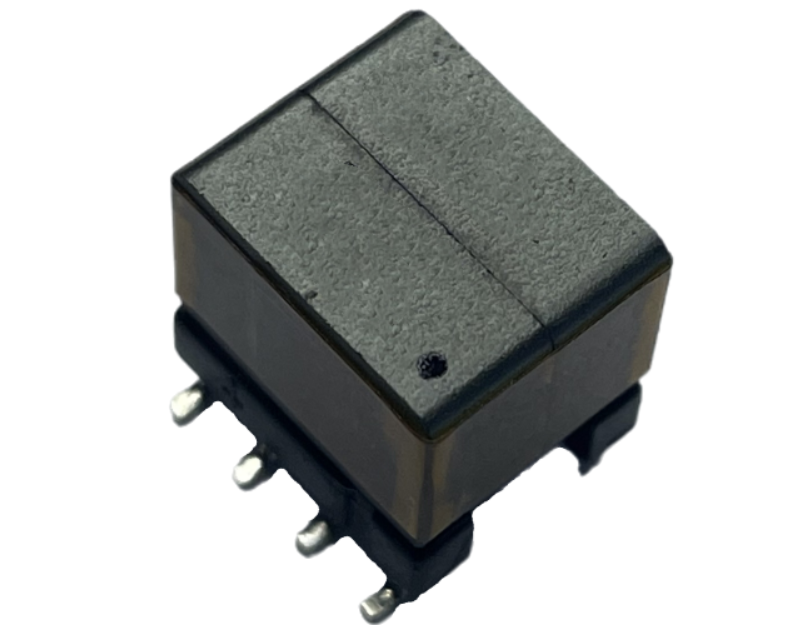
One example is Item Number EP-525SG, an SMT Ethernet transformer developed for PoE applications. It features dimensions of 13.3 × 10.0 × 9.5 mm, an inductance of 310, a power rating of 3, and a 1:0.7:0.7 turn ratio. The SMT mounting structure supports automated PCB assembly while helping designers build compact communication products.
Rather than selecting a transformer only according to package size, engineers normally compare electrical specifications with the intended network architecture. Factors such as PCB layout, expected cable length, interface configuration, EMC requirements, and operating conditions all influence the final component selection process.
Why Custom Magnetic Components Support Modern Network Design
Standard Ethernet interfaces meet the needs of many products, but industrial communication equipment often introduces application-specific requirements. Different switching frequencies, PCB layouts, enclosure dimensions, and electrical environments may require magnetic components with modified characteristics.
For this reason, equipment manufacturers frequently work with suppliers that can support customized magnetic development in addition to standard products. Early engineering collaboration helps verify electrical compatibility before mass production and may reduce redesign work later in the project lifecycle.
Mentech develops customized magnetic components for power modules, new energy systems, communication equipment, and other industrial applications. Within the communication sector, they provide traditional network transformers together with chip LAN transformers that remain compatible with conventional Ethernet transformer applications. Their portfolio allows equipment manufacturers to evaluate different magnetic solutions according to specific networking requirements rather than relying on a single standard configuration.
Looking Beyond Individual Specifications
When evaluating magnetic components, procurement teams often compare dimensions and electrical ratings first. However, long-term product performance depends on more than numerical specifications. Manufacturing consistency, material control, testing procedures, and engineering support all influence whether a communication product performs reliably after deployment.
An experienced ethernet transformer manufacturer also contributes during product development by helping customers review electrical parameters, application environments, and production requirements. This collaborative process allows magnetic components to better match complete communication systems instead of functioning as isolated parts.
Conclusion
Reliable Industrial Ethernet communication depends on a combination of network architecture, PCB design, cable quality, and properly selected magnetic components. Ethernet transformers support signal integrity by providing electrical isolation, impedance matching, and noise suppression, making them an essential part of modern industrial networking equipment used in various environments.
As communication technologies continue to expand across industrial automation and PoE applications, suppliers with magnetic design experience become valuable engineering partners. Proper component selection helps engineers improve network stability and meet different application requirements in industrial systems.
Mentech offers communication magnetic products, including traditional network transformers and chip LAN transformers, while also supporting customized magnetic component development for B2B customers working on specialized networking equipment. Their experience in magnetic solutions helps address different design challenges in communication applications.

