
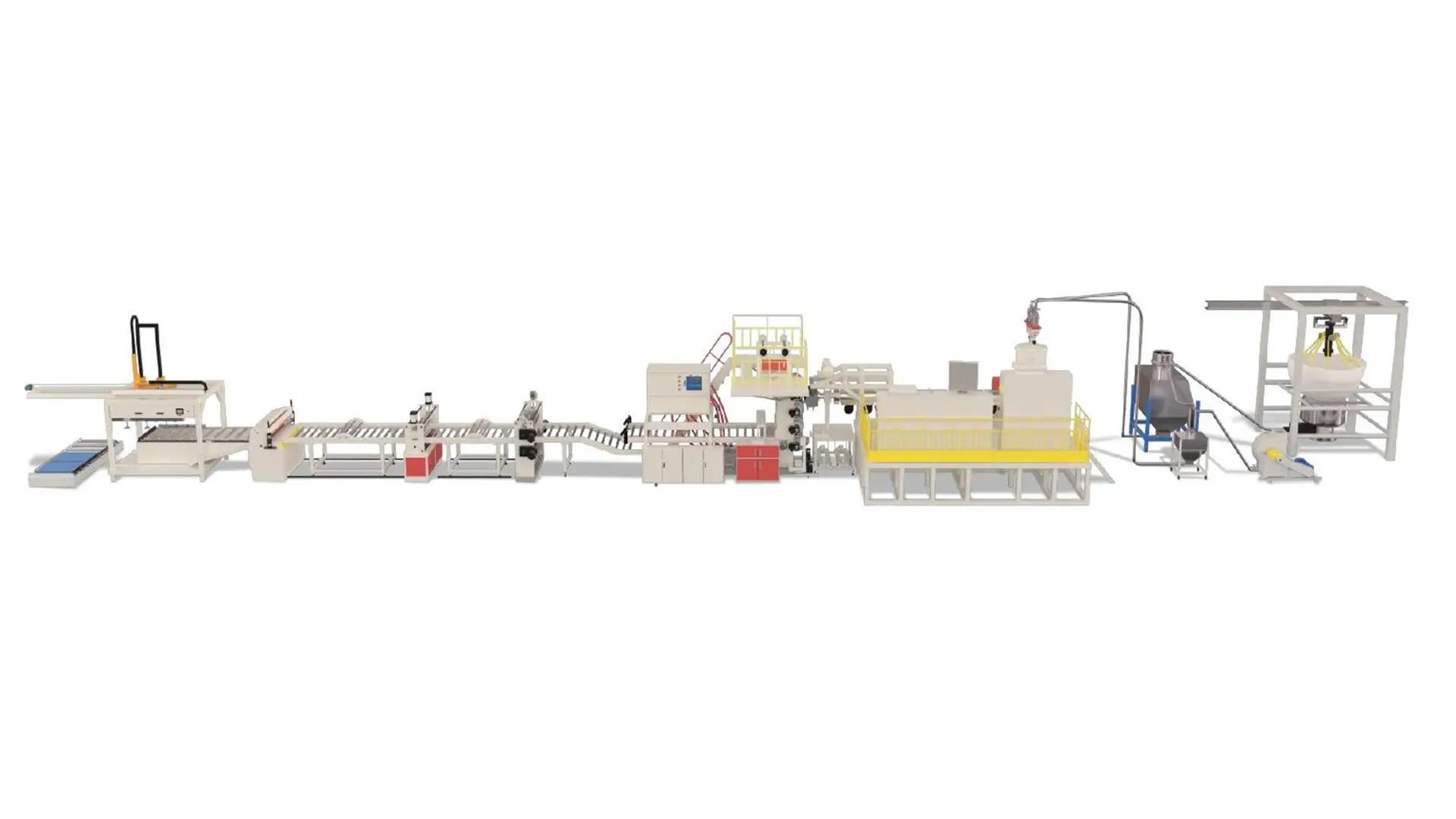
In flooring manufacturing, dust control is an important part of maintaining stable production, especially when processing mineral-filled materials. Many non-PVC flooring formulations contain mineral fillers such as calcium carbonate or stone powder to improve rigidity, dimensional stability, and product performance. However, fine powder particles can become a challenge during storage, feeding, mixing, and extrusion if the production system is not properly designed.
A non pvc flooring extrusion line requires effective material handling and process control to maintain consistent output. Excessive dust can affect not only the factory environment but also equipment operation, material accuracy, and final product quality.
Common Dust Sources in Mineral-Filled Non-PVC Flooring Production
Mineral-filled non-PVC flooring production involves several stages where dust may occur. The first source is usually raw material preparation. Fine mineral powders used in formulations can easily become airborne during loading, transportation, and mixing, especially when materials are frequently transferred between storage and production areas.
The feeding section is another critical point. If the feeding system is not properly sealed, powder leakage may occur around the material inlet. Escaped particles can accumulate around equipment or fall back into the production area, creating additional cleaning requirements.
More importantly, uncontrolled powder loss can affect formulation accuracy. When mineral fillers and other components are not supplied at the expected ratio, the final flooring products may experience color differences, changes in mechanical properties, or inconsistent performance between production batches.
During extrusion, unstable material preparation can also influence processing conditions. Uneven feeding may cause fluctuations in extrusion pressure, making it more difficult to maintain consistent product thickness and surface quality.
How Dust Affects Equipment Operation and Product Quality
Dust control is closely related to both equipment reliability and finished product quality. In modern flooring factories, fine particles may enter sensitive areas if equipment protection and sealing are insufficient.
For example, dust accumulation inside electrical control cabinets, PLC components, or servo connection areas may interfere with signal transmission. This can lead to abnormal feedback signals, false alarms, or unexpected equipment checks during operation.
Dust around mechanical components can also increase maintenance requirements. Regular cleaning becomes necessary to prevent particle buildup from affecting equipment performance and production continuity.
Product appearance is another concern. If powder leaks from feeding areas or remains uncontrolled around the extrusion process, particles may fall onto the flooring surface and create visible defects such as black spots or surface contamination. For decorative flooring products, these defects may result in higher rejection rates and additional material waste.
A properly designed pvc free flooring extrusion line helps manufacturers better control material flow, reduce leakage points, and maintain more stable production conditions.
Practical Dust Control Methods for Flooring Extrusion Factories
Effective dust management requires improvements in both equipment design and daily production operation.
The first step is controlling dust at the material transfer stage. Sealed feeding systems and enclosed conveying structures can reduce powder exposure during transportation. This helps maintain cleaner production areas and improves material utilization.
Dust collection equipment can also be installed near areas with higher dust generation, such as mixing and feeding sections. Capturing particles close to the source prevents dust from spreading to other parts of the factory.
Regular inspection of sealing components is also necessary. Manufacturers should check feeding connections, material outlets, and transfer sections to identify possible leakage points. Preventive maintenance can reduce unexpected downtime caused by cleaning or equipment adjustment.
Operators should also follow consistent material handling procedures. Proper loading methods, equipment cleaning schedules, and routine inspections help maintain stable production conditions during long operating periods.
Equipment Design Considerations for Mineral-Filled Non-PVC Flooring Production
When selecting extrusion equipment for mineral-filled non-PVC flooring, manufacturers should consider how the machine handles powder-based formulations. Stable feeding, accurate material control, and reliable temperature management are important factors affecting production performance.
Automation systems can also support better process monitoring. PLC control allows operators to track operating parameters and respond quickly when abnormal conditions occur. This helps reduce manual adjustment and improves production consistency.
Equipment experience is also important because different flooring materials may require different configurations. Boyu has more than 20 years of experience in extrusion equipment manufacturing and provides customized solutions for flooring extrusion applications. The company focuses on equipment development, automation control, and engineering support for different production requirements.
Reducing Production Risks Through Better Dust Management
Dust control in mineral-filled non-PVC flooring production is directly connected with product quality, equipment maintenance, and material efficiency. Managing powder leakage, protecting sensitive equipment, and maintaining accurate feeding conditions can help manufacturers reduce production interruptions and avoid unnecessary waste.
When choosing extrusion equipment, manufacturers should evaluate not only output capacity but also material handling design, process stability, and maintenance requirements.
With professional extrusion experience and customized solutions, Boyu supports manufacturers in developing reliable flooring production systems.

