
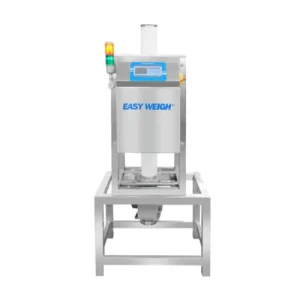
Food packaging serves as the final physical barrier between processed products and the outside environment, yet contamination can occur before that package is sealed. Tiny fragments introduced through raw materials, processing equipment, fasteners, or handling may remain hidden from ordinary visual checks.
Food Industry Metal Detectors provide a non-destructive screening method that can identify ferrous, non-ferrous, and stainless-steel particles as products move through a production line. With this practical need in mind, Easyweigh develops inspection solutions under the Foodman brand, supporting manufacturers that need consistent contamination control alongside established HACCP practices.
Why Metal Contamination Requires Targeted Detection
Metal contamination does not always originate from one obvious source. Machinery components can gradually wear, cutting tools may shed particles, and damaged utensils or maintenance materials can introduce fragments into food. Raw ingredients themselves may also carry metallic particles if upstream handling conditions are not sufficiently controlled.
Visual inspection has obvious limitations in such circumstances. Small fragments can become embedded inside dense foods, hidden beneath coatings, or concealed by opaque packaging. Their appearance may also resemble surrounding materials, making manual identification difficult at normal production speeds.
Different metals present different detection characteristics. Ferrous materials generally respond strongly to magnetic fields, while non-ferrous metals such as aluminum and copper behave differently. Stainless steel can be more challenging to detect because its electrical and magnetic properties vary according to composition and processing history.
Packaging Conditions Shape Inspection Performance
Package construction has an important influence on metal detection. Flexible film, cartons, trays, and other containers create different operating conditions, while product moisture and salt content can also affect detector response. High-moisture foods, in particular, may generate signals that resemble those produced by metallic contaminants.
Product temperature deserves attention as well. Frozen goods, chilled foods, and freshly processed items can behave differently during inspection. Changes in conductivity, surface condition, and product presentation may alter the background signal that the detector must distinguish from an actual contaminant.
Packaging orientation should not be overlooked either. Irregular movement or inconsistent spacing can make product signals less stable. Suitable conveyor handling, carefully selected detection parameters, and regular verification help create more dependable inspection conditions across changing production batches.
Finding the Right Balance Between Sensitivity and Stability
Higher sensitivity is not automatically the most useful objective. Excessively aggressive settings can increase false rejects when natural product characteristics produce signals similar to metal. Conversely, settings that are too conservative may make smaller contaminants more difficult to identify.
Product-specific validation provides a more sensible basis for configuration. Samples representing normal production conditions can be assessed against relevant contaminant types and sizes, allowing quality teams to understand how the detector behaves under realistic circumstances.
Environmental factors should also form part of the assessment. Electrical interference, vibration, nearby machinery, temperature fluctuations, and moisture can influence detector stability. Routine checks help identify changes before they become persistent production problems.
Adapting Metal Detection to B2B Production Realities
No two food plants run identical packaging formats, line speeds, or contamination profiles. A detector tuned for one product may behave differently on another. Easyweigh supports B2B customers through OEM and ODM arrangements. Aperture dimensions, conveyor width, and reject method can be adjusted during development. Software settings, interface language, and data outputs can also be tailored to specific requirements.
Testing with actual product samples verifies performance before installation. After commissioning, training, spare parts, and technical support remain available. When products or packaging change, the equipment can be updated through software revisions or modular hardware changes rather than full replacement. This flexible cooperation helps metal detection keep pace with long-term production changes.
Turning Rejections Into Useful Quality Information
A rejected package should not automatically be treated as an isolated incident. Repeated detections may reveal useful clues about upstream operations, especially if similar findings appear within a particular batch, shift, ingredient lot, or production period.
Investigation can begin with the nature of the detected material. Ferrous findings may suggest one set of mechanical sources, whereas stainless-steel fragments could point toward different equipment or handling conditions. Examining the location and frequency of detections can further narrow the potential cause.
Documentation adds another layer of value. Recording inspection events alongside maintenance activities, ingredient batches, and production changes creates a clearer history of contamination risks. Such records can support internal reviews and help quality personnel refine preventive measures rather than relying entirely on end-of-line rejection.
Making Detection Part of a Broader Safety Program
Metal detection works best as one component within a wider food-safety framework. Supplier assessment, equipment maintenance, hygienic handling, ingredient controls, process inspections, and packaging checks address different stages of potential contamination. No individual checkpoint can replace the need for coordinated controls across the production process.
HACCP-based procedures can help determine where metal detection has the greatest relevance. Risk analysis should consider the product, equipment, ingredients, processing conditions, and likely contamination routes before defining monitoring and verification practices.
Packaging inspection also benefits from clear operating discipline. Staff need defined procedures for handling rejected products, checking detector performance, recording abnormal findings, and escalating recurring issues. These practices turn detection results into actionable quality information rather than treating the detector as a standalone checkpoint.
Food safety depends on understanding where contamination can arise and how reliably each control addresses its particular risk. Food Industry Metal Detectors offer manufacturers a focused method for identifying metallic particles that may remain hidden within food or packaging, while appropriate validation and routine verification help maintain meaningful results.
Easyweigh, through its Foodman offering, fits into this broader approach by combining contamination inspection with practical production requirements. Used alongside HACCP procedures and preventive controls, Food Industry Metal Detectors can strengthen packaged-food inspection without replacing the other safeguards that support product quality.

