
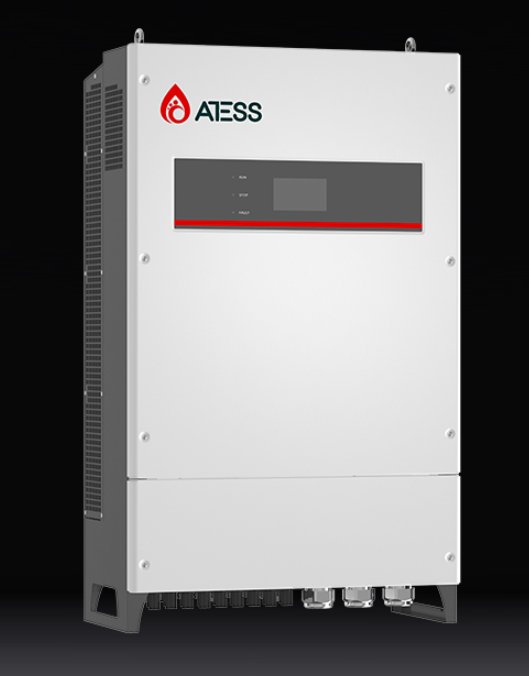
In many energy projects, distributors and EPC teams often ask about the difference between off-grid and on-grid inverters. At the start of system planning, identifying how a 30kw inverter interacts with the grid is essential. Off-grid models operate independently from public utilities, while on-grid systems synchronize with local power networks to export excess electricity. When discussing solutions from Atess, they often explain that off-grid designs rely on batteries or diesel generators to maintain power availability, making them suitable for remote sites or regions with unstable grids. In comparison, on-grid systems focus on efficiency and structured power flow, feeding solar production into the utility line when sunlight is strong. This contrast helps clarify why the choice between the two affects installation methods, load priorities, and long-term planning for commercial users needing a reliable arrangement using a 30kw off grid inverter.
Technical Characteristics and Application Differences
During project configuration, distributors frequently review how a 30kw inverter behaves under varying grid conditions. Off-grid units provide electricity directly to loads and require battery integration, which allows stable performance even when utility power is unavailable. On-grid units, however, depend on continuous grid presence, shutting down automatically during outages for safety. When they present their hybrid solutions, Atess emphasizes balanced power management suitable for sensitive loads. Their Hybrid Inverter HPS30000TL/40000TL/50000TL supports PV, battery, DG, grid, and load connections in one structure, offering flexibility for mixed-use environments. These models feature multiple MPPTs, with a maximum of three, making it easier to design arrays on commercial rooftops or irregular spaces. This structure also aligns well with distributors seeking products that handle demanding environments while accommodating the operational style of a 30kw off grid inverter.
Selecting the Right System for Project Needs
When distributors compare the two inverter types, the decision often depends on whether constant grid interaction is required. A 30kw inverter in an on-grid setup enhances production efficiency, while an off-grid arrangement prioritizes autonomy and resilience. They often recommend reviewing local grid reliability, load characteristics, and the expected role of energy storage. With hybrid designs offered by Atess, users can combine both functions, maintaining flexibility when project requirements evolve. Their systems help resolve challenges in areas where power interruptions are common, making them practical for distributors who serve commercial sites looking for structured power control with a capable 30kw off grid inverter.
Conclusion
In summary, the core difference lies in grid dependence. Off-grid models provide independent power, while on-grid units rely on utility support. By understanding these distinctions, distributors can choose solutions that match project objectives. Hybrid designs from Atess further support adaptable energy strategies, giving teams confidence when integrating a 30kw inverter or planning long-term usage with a stable 30kw off grid inverter.

